
Outbound calling in the United States is regulated, penalties are assessed per call, and "we did not know" has never been a defence. This is an overview of the areas that matter most in real estate outbound. It is not legal advice, and anyone running volume should have a telecoms attorney review their setup. That review is cheap relative to the exposure.
The Do Not Call registry
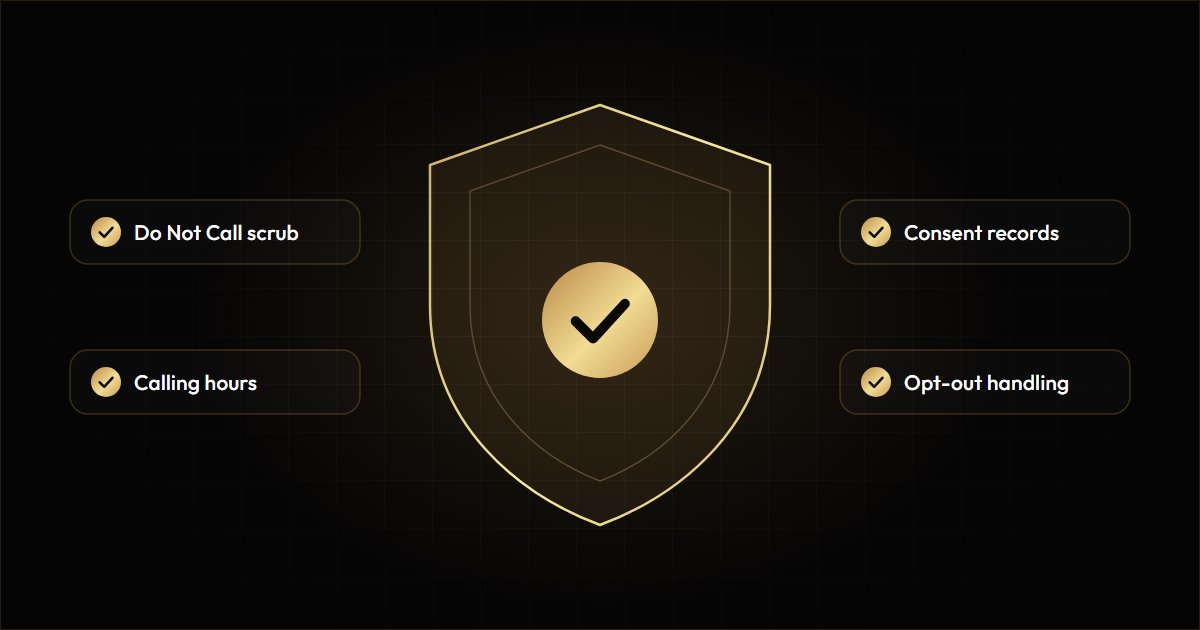
The national registry is the first thing to get right. Numbers on it may not be called for telemarketing purposes without an established business relationship or written consent. Scrubbing is not a one-off task. The registry changes constantly, and lists have to be re-scrubbed on an ongoing basis rather than once when purchased.
Many states run their own registries in addition to the federal one. A national campaign that scrubs only against the federal list is not compliant everywhere it is calling.
Your own internal do-not-call list
Separately from the national registry, you are required to maintain your own suppression list and honour requests promptly. This is the one that catches operations out, because it depends entirely on internal discipline.
- A request to stop calling must be recorded at the moment it happens, not at the end of the shift
- It must apply across every campaign and every list, not just the one being worked
- It has to persist: a number suppressed in March must still be suppressed when a new list is loaded in September
- Callers need one obvious way to do it, or under pressure they will not
This is a systems problem more than a training problem. If suppression requires a caller to remember to do something in a second window, it will be missed.
Calling hours
Calls are restricted to 8am to 9pm in the called party local time, with some states narrower. The critical word is theirs, not yours. A dialer that does not enforce destination-local hours will eventually place a call at 6am somewhere, and that call is a violation regardless of intent.
Automated dialing and consent
The rules around automated and predictive dialing, prerecorded messages and calls to mobile numbers are the most complex and most actively litigated part of this area, and they have moved repeatedly in recent years. Mobile numbers in particular carry different requirements from landlines, which matters enormously for skip-traced real estate lists, since most of what skip tracing returns is mobile.
This is precisely the area where a lawyer earns their fee. Do not take a forum post as guidance on it, including this one.
Identification
Callers must identify themselves and who they are calling on behalf of, and must not misrepresent the purpose of the call. Beyond compliance, this is also just good calling. The openings that hide the purpose of the call perform worse anyway.
Records
Keep evidence. Which list a number came from, when it was scrubbed, what was said, when consent or suppression was recorded. Recording calls is subject to its own state-by-state consent rules, so the recording policy needs checking too.
The practical reason to keep records is that most complaints resolve quickly when you can show what actually happened, and become expensive when you cannot.
What good looks like operationally
- Lists scrubbed against federal and applicable state registries before loading, and re-scrubbed on a schedule
- A dialer configured for destination-local calling hours
- One-click suppression available to every caller, applying globally and permanently
- Calls recorded and retained, with a policy that reflects the states you call into
- Someone whose job includes checking all of the above monthly
Elite Reach Solutions runs client campaigns with suppression, calling-window controls and call recording built into the operation rather than left to individual callers to remember.